How Transmission Line Foundations Get Built in Arizona's Toughest Terrain
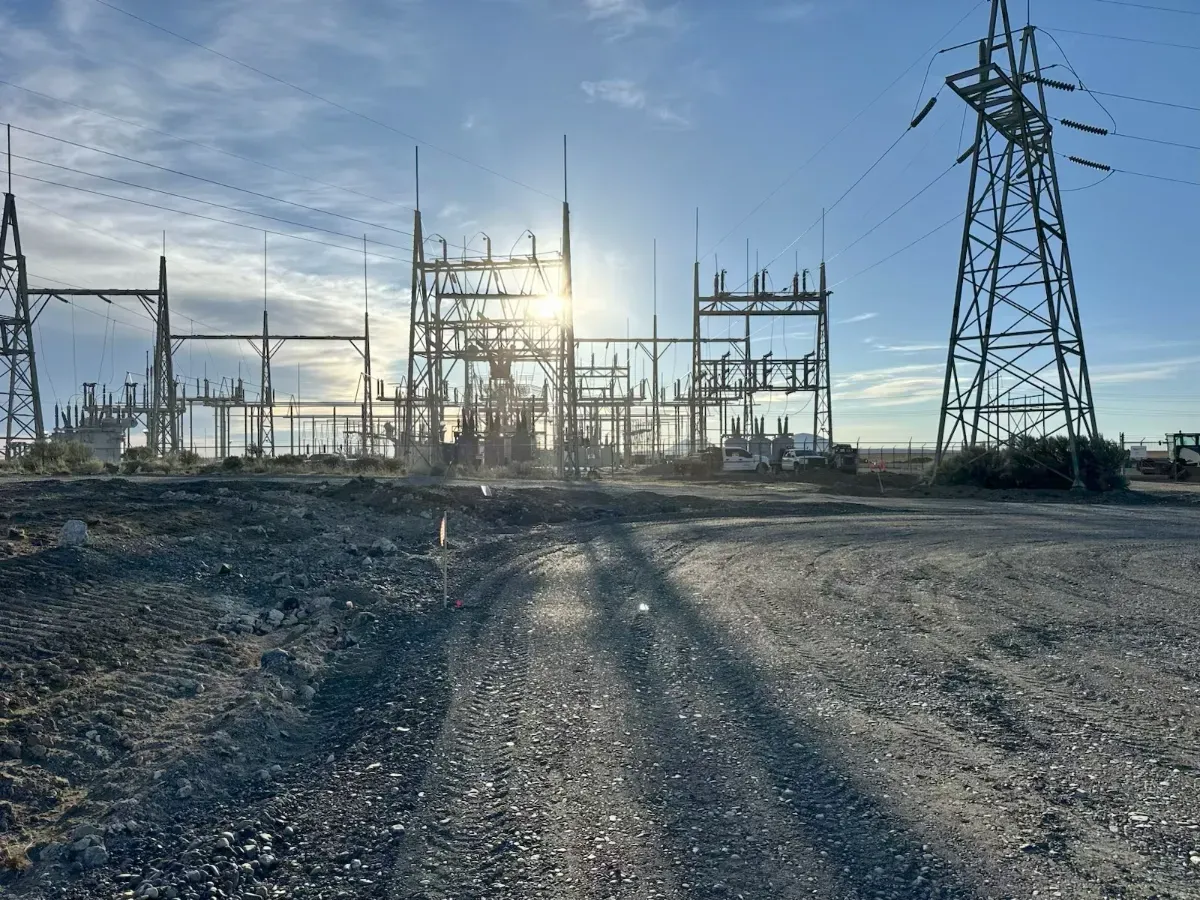
Every transmission structure you see crossing the Arizona desert stands on a foundation most people never think about. Getting that foundation into the ground, often miles from pavement, is some of the most demanding civil work in the utility industry. Here is how it actually happens.
What comes before the drilling?
Access. A drill rig cannot work where it cannot reach, so foundation projects frequently begin with road construction, grading, and work pad building along the right of way. In sensitive areas, crews use matting to protect the ground surface and follow best management practices to control erosion and runoff. On many projects, building the access is half the battle.
How are the foundations drilled?
Most transmission structures sit on drilled pier foundations. A drill rig bores a shaft, crews set a reinforcing steel cage and anchor bolts to the engineer's specification, and concrete is placed to create a pier that anchors the structure against wind, tension, and decades of load. Sounds simple. Arizona makes it hard.
Caliche and rock slow penetration and punish equipment. Water-filled excavations require dewatering or specialized placement methods. Remote sites mean every yard of concrete and every piece of steel has to travel the access you built. Crews that only work in easy ground find out quickly that transmission corridors do not offer much of it.
What about sites equipment cannot reach?
Some structure locations sit in terrain where machine excavation is impossible or prohibited. That is where hand excavation crews come in, digging foundations in locations that heavy equipment cannot access, including congested easements and environmentally restricted ground. It is slow, disciplined work, and it is a capability that separates utility specialists from general excavation contractors.
What happens after the foundation is in?
Restoration. Responsible utility construction returns the corridor to the condition landowners and agencies expect. That includes regrading, drainage, culvert work where roads remain, and complete site restoration where they do not. Low-impact methods during construction make restoration faster and keep projects compliant.
Why does the crew matter more than the rig?
Equipment is available to anyone with capital. What determines whether a foundation program hits schedule is judgment: reading changing ground conditions, protecting workers around energized facilities, and solving access problems without drama. Alpine Drilling and Construction self-performs drilling, excavation, foundations, roadwork, and restoration with union trained crews carrying more than 35 years of combined utility industry experience. One accountable contractor from survey to restoration, instead of a chain of subcontractors pointing at each other.
Alpine Drilling and Construction is a woman-owned utility civil contractor headquartered in Camp Verde, Arizona, supporting transmission, distribution, and substation projects across Arizona and the Western United States. If your project includes foundations in ground that scares other bidders, we would like to see it. Reach us at bids@alpinedrillingllc.com.