What Is Helical Pile Installation and When Does It Make Sense on Utility Projects?
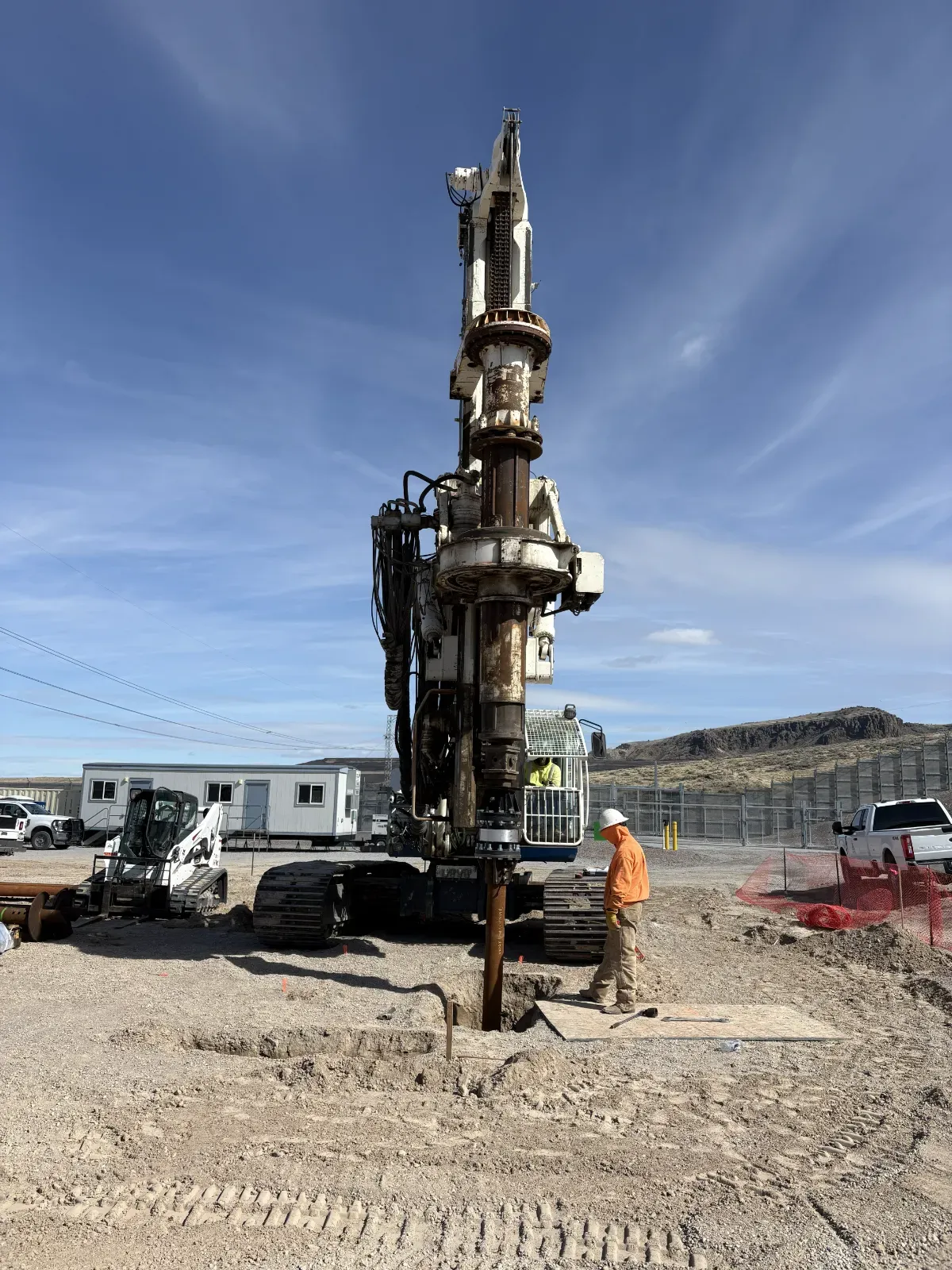
Helical piles are steel foundation elements with helix-shaped plates that crews rotate into the ground like a screw, using hydraulic drive heads instead of drilling and pouring concrete. For utility projects, they solve a specific set of problems that conventional foundations struggle with. If your project involves difficult soils, tight access, or work near energized equipment, helical piles deserve a serious look.
How does a helical pile actually work?
The pile transfers structural load through the helix plates into competent soil below the surface. Because installation is a rotation rather than an excavation, there is minimal spoil, minimal vibration, and no waiting on concrete cure times. Torque readings during installation give the crew real-time confirmation of load capacity, which means you know the foundation performs before anything gets built on top of it.
When do utility projects call for helical piles?
Four situations come up again and again in Arizona utility work.
First, poor or unpredictable soils. When drilled shafts would collapse or require casing, helical piles bypass the problem by reaching competent material without an open excavation.
Second, limited access. Remote structure sites and narrow easements often cannot accommodate large drill rigs and concrete trucks. Helical pile equipment is compact by comparison, and crews can install in locations where conventional foundation work is impractical.
Third, work near energized facilities. Substations and existing infrastructure demand low-vibration methods. Screwing a pile into the ground disturbs far less than drilling beside live equipment.
Fourth, schedule pressure. Helical piles can be loaded immediately after installation. On projects where getting power online drives everything, removing concrete cure time from the critical path matters.
Why does certified installation matter?
Helical piles are engineered foundations, not fence posts. Capacity depends on correct torque, depth, and alignment, and a pile installed wrong can look fine while underperforming badly. Alpine Drilling and Construction holds a Pileworks helical pile installer certification, and our union trained crews self-perform the work rather than passing it to subcontractors. That combination means the people turning the pile are trained, accountable, and answerable to the same safety culture that governs everything we do.
Do helical piles work in Arizona ground?
Arizona presents caliche, cobble, and rock that challenge every foundation method. Site-specific geotechnical data determines whether helical piles are the right answer, and an experienced installer will tell you honestly when they are not. That judgment is part of what you are hiring.
The bottom line
Helical piles give utility projects a fast, low-impact, verifiable foundation option for sites where conventional methods cost too much time or disturbance. The key is matching the method to the ground and putting certified crews on the equipment.
Alpine Drilling and Construction is a woman owned utility contractor based in Camp Verde, Arizona, serving transmission, distribution, and substation projects across the state and the Western United States. Have a site with difficult soils or difficult access? Send us the details at bids@alpinedrillingllc.com and we will give you a straight answer.